Solar Panel Cost Per Watt in 2026: US Pricing by State
Updated July 2026
If you got three solar quotes and got three different numbers, don’t worry. That’s normal. Installers size systems in different ways. A flat price alone does not tell you much.
There is a simple fix. It’s called cost per watt ($/W). This one number lets you compare any two quotes fairly. It works no matter how big or small each system is.
This guide also tells you something many other 2026 solar guides hide or skip. The federal tax credit for buying solar ended on December 31, 2025. This one change affects almost every price below. So we put it near the top, not buried deep in the article.
People ask this question in many different ways. Some search for solar panel price. Some search for cost of a solar panel. Others type solar panels cost, household solar panel cost, solar power panel cost, home solar panels cost, solar panels for home cost, cost for solar panel, cost for solar panels, cost of solar panels for homes, cost of solar electric panels, or how much does solar panels cost. They all mean the same thing. This guide answers all of them in one place.
Quick Answer
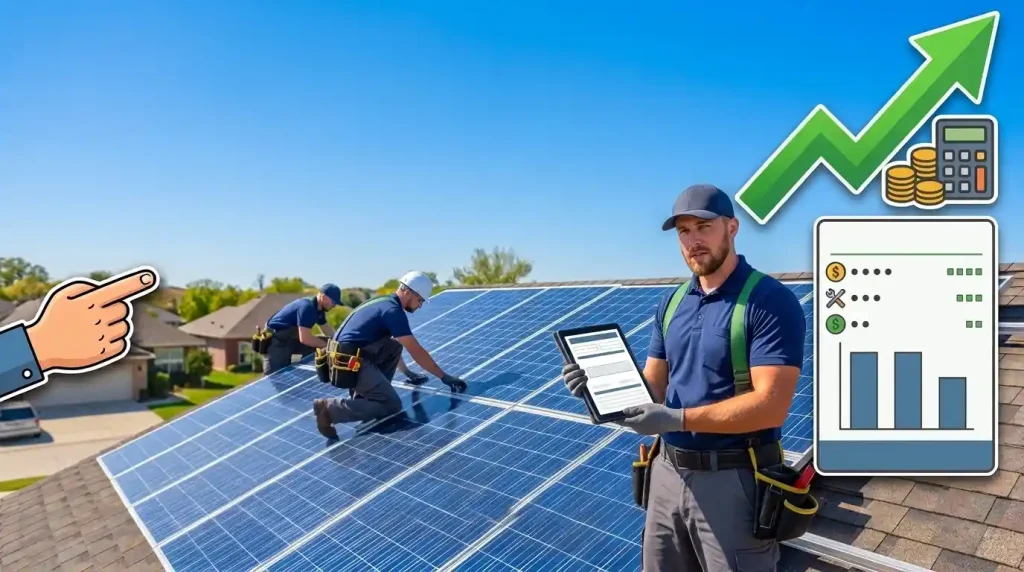
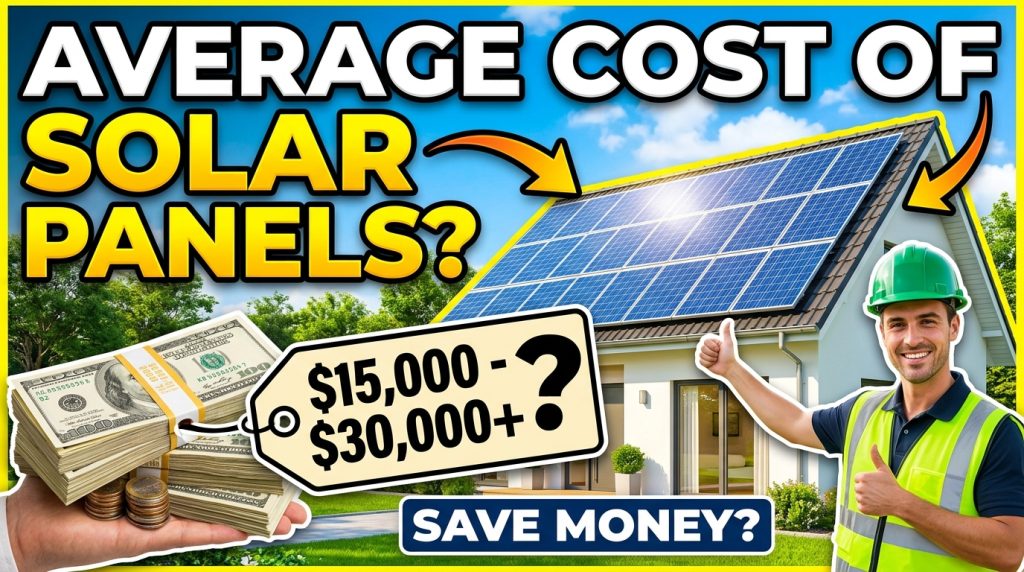
National average solar cost in 2026: $2.50–$3.50 per watt installed, before any incentives.
- Typical home system (7–10 kW): $18,000–$31,000
- DIY panel-only kits: $0.80–$1.40 per watt
- Commercial systems: $1.80–$2.50 per watt
- Federal tax credit for buying solar: gone as of January 1, 2026 (more on this in Section 08)
These numbers come from real 2026 market data. That includes EnergySage’s live pricing, SEIA/Wood Mackenzie market reports, and NREL cost studies.
01. What “Cost Per Watt” Actually Means
Solar companies do not quote one flat price. They quote a price for each watt of power your system can make. This is written as $/W.
Think of it like price-per-square-foot for a house. It does not tell you the total price by itself. But it lets you compare a small home and a big home in a fair way. Cost per watt does the same job for a small solar system and a big one.
Here’s a fact most guides leave out: the solar panels themselves are only a small part of your bill. The rest is what installers call “soft costs.” That’s a fancy word for labor, permits, inspections, the inverter (the box that turns solar power into power your home can use), mounting hardware, and the installer’s own profit. Panels usually make up somewhere between 12% and 30% of your total price. So when your neighbor says “panels got so cheap,” they are only talking about part of your bill. Labor and permitting have not dropped nearly as fast.
02. Average Solar Panel Cost in 2026
Different sources give slightly different numbers. But they all land close to the same range.
| Source | 2026 Average |
|---|---|
| EnergySage Marketplace | ~$2.60/W |
| ConsumerAffairs | ~$2.82/W |
| Solar.com | ~$2.75/W |
| SEIA / Wood Mackenzie | ~$2.85/W |
| NREL / Sunhub blended estimate | ~$2.75/W |
Bottom line: plan for $2.50–$3.50 per watt for a normal home system, before any discounts. If a quote is under $2.00/W, ask what is missing. If it is over $3.50/W with no clear reason (a steep roof, top-tier panels, a battery), get more quotes before you decide.
| Metric | 2026 Range |
|---|---|
| National average cost per watt | $2.50 – $3.50/W |
| Typical residential system size | 7 – 10 kW |
| Average total system cost (before incentives) | $18,000 – $31,000 |
| DIY panel-only price | $0.80 – $1.40/W ($200–$350 per panel) |
| Commercial systems | $1.80 – $2.50/W |
03. How Much Do Solar Panels Cost for a House? (By System Size)
Bigger systems almost always cost less per watt. Why? Some costs stay the same no matter the system size, like the permit fee and the visit to check your home. A bigger system spreads those same costs over more panels.
| System Size | Estimated Cost (Before Incentives) | Fits |
|---|---|---|
| 4 kW | $10,000 – $14,000 | Small condo or apartment |
| 6 kW | $15,000 – $21,000 | Small home |
| 8 kW | $20,000 – $28,000 | Average home |
| 10 kW | $25,000 – $35,000 | Larger home |
| 12 kW | $30,000 – $42,000 | Large home, high usage |
A 10 kW system does not usually cost double a 5 kW system. It’s closer to 1.6–1.8 times as much, because labor and permitting cost about the same either way.
Solar Panel Cost by Home Size (Square Footage)
Solar is not priced by your home’s square footage, the way flooring is. It is priced by how much electricity you use. Still, installers use a rough rule of thumb: about 1 kW of solar for every 200–250 sq ft of living space you heat and cool.
- 1,500 sq ft home: usually needs 4–6 kW → about $10,000–$21,000 installed. A pool pump, electric heat, or an electric car can push this toward the high end, even for the same size home.
- 2,000 sq ft home: usually needs 6–8 kW → about $15,000–$28,000 installed. This matches an “average home” the closest.
- 3,000 sq ft home: usually needs 8–12 kW → about $20,000–$42,000 installed, depending on how much of that space you heat and cool.
Your real electricity use matters more than your square footage. A small home that runs on electric heat can need a bigger system than a large home that mostly uses gas.
04. Cost Per Panel: DIY vs. Professional Installation
A standard home solar panel today makes 400–450 watts. Here is what that costs, two different ways:
| Buying Method | Price Per Panel | What’s Included |
|---|---|---|
| DIY hardware only | $200 – $350 | Just the panel. No labor, permits, wiring, or inspection. |
| Professional install (effective cost per panel) | $800 – $1,300 | Panel, labor, part of the inverter cost, racking, permitting, inspection |
That gap surprises a lot of first-time buyers. The panel is not the expensive part. Everything around it is.
Is DIY actually cheaper? Sometimes. But be honest with yourself about what you give up:
- DIY kits skip code-compliant wiring, permits, and the paperwork needed to connect to the power grid. A licensed installer normally handles all of that for you.
- A DIY install can void the panel or inverter’s warranty.
- Many state programs that give money back require a licensed installer. Go DIY, and you may not qualify.
- DIY makes real sense for small, off-grid jobs — like charging a shed, an RV, or a small cabin. A full system tied to your home’s power grid is a bigger job. Most homeowners still hire a licensed installer for that.
05. Solar Panel Cost Per Month
Most homeowners do not pay cash. They finance instead.
A $20,000–$30,000 system, paid off over 15–20 years, usually runs $120–$300 per month. The exact number depends on your interest rate and loan length. Many homeowners cover some or all of that payment with lower electric bills. But the loan payment and the bill savings are two separate numbers. Don’t assume they cancel out perfectly in year one.
- Cash purchase: no monthly payment, biggest cost upfront, no interest paid over time.
- Solar loan: $0 or low money down, a fixed monthly payment, and you own the system (plus any future tax benefits).
- Lease or PPA (power purchase agreement): no cost upfront, a fixed monthly fee instead of a loan payment, but you do not own the system. More on why that matters in Section 08.
06. What’s Actually Inside Your Solar Quote
Installation costs — labor, permits, inspection, mounting, and wiring — usually make up more than half of what you pay. That is a big reason prices differ more by state and installer than by panel brand.
| Line Item | Typical Share of Total Cost |
|---|---|
| Panels & hardware | ~25% |
| Labor | ~30% |
| Inverter & racking | ~18% |
| Permitting & inspection | ~12% |
| Overhead & installer profit | ~15% |
If two installers quote the same panel brand but very different total prices, the difference is almost always hiding in labor, overhead, or profit — not the panels.
07. The Big 2026 Change: The Federal Tax Credit Is Gone for Buyers
This is the most important update for anyone pricing solar in 2026. It is also the part a lot of old or out-of-date guides still get wrong.
Here’s what happened. For almost 20 years, homeowners who bought a solar system with cash or a loan could get 30% of the cost back on their federal taxes. This tax break had a name: Section 25D. Think of Section 25D like a coupon the government gave you at tax time.
In July 2025, Congress passed a new law called the One Big Beautiful Bill Act. This law ended Section 25D for any system turned on after December 31, 2025. There was no slow step-down. It just stopped, like a light switch.
What that means for you in 2026:
- Buy your system with cash or a solar loan → $0 federal tax credit. The coupon is gone.
- Sign a lease or a PPA (a “power purchase agreement,” which just means a company owns the panels on your roof and sells you the power) → the company that owns the system can still claim a similar 30% credit, under a different rule called Section 48/48E. That company can pass some of that savings to you as a lower monthly bill. You never file for it yourself, and you never own the panels.
- If your system was fully installed and turned on by December 31, 2025, you still qualify for the old 30% credit on your 2025 tax return, even if you are only filing for it now.
There is one more deadline to know. Companies that offer leases or PPAs usually need to start building your system before July 4, 2026, to lock in the strongest version of that business tax credit. Ask any lease or PPA company directly if their project meets this deadline. Do not assume it does.
Here’s the biggest wrong idea floating around right now: a lot of homeowners still think they will get “30% back,” because that is how solar worked for years. In 2026, that is only true if you go the lease or PPA route — not if you buy the system yourself. If a salesperson tells you a cash purchase still gets a federal tax credit, that is out of date or simply wrong. Check with a tax professional before you sign anything.
What is still available to you:
- State tax credits — some states, like South Carolina and New York, still offer their own credits
- Net metering — a program where you get credit for extra power your panels send back to the grid
- Property tax breaks on the added home value, in many states
- Sales tax breaks on the equipment, in some states
- Utility rebates, in some areas
Since the federal credit is gone for buyers, your state and local programs now matter a lot more than they used to. Check your state energy office and your power company before you sign any quote.

08. Solar Panel Pricing by State
Labor rates, permit fees, and the number of installers competing for your business all change a lot from state to state. Here is a 2026 snapshot for all 50 states, based on an 8 kW system.
| State | Avg. Cost per Watt | 8kW System Estimate |
|---|---|---|
| Alabama | $3.39 – $3.99/W | $27,100 – $31,900 |
| Alaska | $2.88 – $3.38/W | $23,000 – $27,000 |
| Arizona | $2.11 – $2.47/W | $16,900 – $19,800 |
| Arkansas | $2.26 – $2.66/W | $18,100 – $21,300 |
| California | $2.25 – $2.65/W | $18,000 – $21,200 |
| Colorado | $2.57 – $3.01/W | $20,600 – $24,100 |
| Connecticut | $2.90 – $3.50/W | $23,200 – $28,000 |
| Delaware | $2.75 – $3.25/W | $22,000 – $26,000 |
| Florida | $2.01 – $2.35/W | $16,100 – $18,800 |
| Georgia | $2.31 – $2.71/W | $18,500 – $21,700 |
| Hawaii | $3.01 – $3.53/W | $24,100 – $28,200 |
| Idaho | $2.90 – $3.40/W | $23,200 – $27,200 |
| Illinois | $2.77 – $3.25/W | $22,200 – $26,000 |
| Indiana | $2.50 – $3.00/W | $20,000 – $24,000 |
| Iowa | $2.95 – $3.47/W | $23,600 – $27,800 |
| Kansas | $2.52 – $2.96/W | $20,200 – $23,700 |
| Kentucky | $2.35 – $2.75/W | $18,800 – $22,000 |
| Louisiana | $2.36 – $2.78/W | $18,900 – $22,200 |
| Maine | $2.90 – $3.45/W | $23,200 – $27,600 |
| Maryland | $2.43 – $2.85/W | $19,400 – $22,800 |
| Massachusetts | $2.71 – $3.19/W | $21,700 – $25,500 |
| Michigan | $2.73 – $3.21/W | $21,800 – $25,700 |
| Minnesota | $2.93 – $3.43/W | $23,400 – $27,400 |
| Mississippi | $2.34 – $2.74/W | $18,700 – $21,900 |
| Missouri | $2.55 – $3.10/W | $20,400 – $24,800 |
| Montana | $2.52 – $2.96/W | $20,200 – $23,700 |
| Nebraska | $3.63 – $4.27/W | $29,000 – $34,200 |
| Nevada | $2.33 – $2.73/W | $18,600 – $21,800 |
| New Hampshire | $2.95 – $3.50/W | $23,600 – $28,000 |
| New Jersey | $2.55 – $2.99/W | $20,400 – $23,900 |
| New Mexico | $2.51 – $2.95/W | $20,100 – $23,600 |
| New York | $2.52 – $2.96/W | $20,200 – $23,700 |
| North Carolina | $2.14 – $2.52/W | $17,100 – $20,200 |
| North Dakota | $3.76 – $4.42/W | $30,100 – $35,400 |
| Ohio | $2.51 – $2.95/W | $20,100 – $23,600 |
| Oklahoma | $2.38 – $2.80/W | $19,000 – $22,400 |
| Oregon | $2.45 – $2.87/W | $19,600 – $23,000 |
| Pennsylvania | $2.35 – $2.75/W | $18,800 – $22,000 |
| Rhode Island | $2.53 – $2.97/W | $20,200 – $23,800 |
| South Carolina | $2.55 – $3.05/W | $20,400 – $24,400 |
| South Dakota | $3.87 – $4.55/W | $31,000 – $36,400 |
| Tennessee | $3.29 – $3.87/W | $26,300 – $31,000 |
| Texas | $2.02 – $2.38/W | $16,200 – $19,000 |
| Utah | $2.45 – $2.87/W | $19,600 – $23,000 |
| Vermont | $2.95 – $3.55/W | $23,600 – $28,400 |
| Virginia | $2.21 – $2.59/W | $17,700 – $20,700 |
| Washington | $2.37 – $2.79/W | $19,000 – $22,300 |
| Washington, D.C. | $2.74 – $3.22/W | $21,900 – $25,800 |
| West Virginia | $2.80 – $3.28/W | $22,400 – $26,200 |
| Wisconsin | $2.79 – $3.27/W | $22,300 – $26,200 |
| Wyoming | $3.27 – $3.83/W | $26,200 – $30,600 |
A few patterns worth knowing:
- Cheapest region: the Sun Belt. Arizona, Nevada, New Mexico, and Texas have lots of sun and lots of installers competing for your business.
- Most expensive region: the Northeast and upper Midwest. This is mostly about labor cost and fewer installers, not the weather.
- Cold, cloudy states like Maine and Vermont often need bigger systems, because they use more electricity for heat in winter. That raises the total price even when the per-watt rate looks the same as a nearby state.
- A high price does not always mean a bad deal. States like New Jersey and Massachusetts have higher electric rates and stronger state programs. So your money can come back faster there, even if the system itself costs more upfront.
Quick State Answers (8 kW System)
- Cost of solar panels in CT (Connecticut): $23,200–$28,000, one of the higher-priced Northeast states due to labor costs.
- Cost of solar panels in Missouri: $20,400–$24,800, close to the national average.
- Cost of solar panels Indiana (also written as “cost of solar panels in Indiana” or “how much do solar panels cost in Indiana”): $20,000–$24,000.
- How much do solar panels cost in South Carolina: $20,400–$24,400, with a state tax credit still available to offset the loss of the federal one.
- How much do solar panels cost in Maine: $23,200–$27,600, on the higher end because of labor rates and a smaller installer network.
- How much do solar panels cost in New Hampshire: $23,600–$28,000.
- How much do solar panels cost in Vermont: $23,600–$28,400, one of the highest in the Northeast.
- Cost of home solar panels in Delaware: $22,000–$26,000.
- Solar panel cost AK (Alaska): $23,000–$27,000. Alaska runs higher than most states because of remote logistics and fewer competing installers.
- Solar panel cost KS (Kansas): $20,200–$23,700, right around the national average.
09. Solar Panel Prices by City
Local permit fees, how many installers compete near you, and common roof types can all change the price, even within the same state. These are 2026 planning numbers for a 7–8 kW home system. Always get a real quote from a local installer — this table is a starting point, not a promise.
California
Covers solar panel cost Bakersfield, solar panel cost Livermore, solar panel cost Pleasanton, solar panel cost San Ramon, solar panel cost Walnut Creek, solar panel cost Santa Clara, solar panel cost Santa Rosa, solar panel cost San Luis Obispo, solar panel cost Encinitas, solar panel cost Huntington Beach, and solar panel cost El Cajon.
| City | Estimated Cost (7–8 kW) |
|---|---|
| Bakersfield, CA | $19,500–$23,500 |
| Livermore, CA | $21,000–$26,000 |
| Pleasanton, CA | $21,000–$26,000 |
| San Ramon, CA | $21,500–$26,000 |
| Walnut Creek, CA | $21,500–$26,000 |
| Santa Clara, CA | $22,000–$27,000 |
| Santa Rosa, CA | $21,000–$25,500 |
| San Luis Obispo, CA | $20,500–$25,000 |
| Encinitas, CA | $21,500–$26,000 |
| Huntington Beach, CA | $21,500–$26,000 |
| El Cajon, CA | $20,500–$25,000 |
Texas
Covers solar panel cost Fort Worth, solar panel cost Frisco, and solar panel cost San Marcos.
| City | Estimated Cost (7–8 kW) |
|---|---|
| Fort Worth, TX | $18,500–$22,500 |
| Frisco, TX | $19,000–$23,000 |
| San Marcos, TX | $18,500–$22,500 |
Arizona
Covers solar panel cost Scottsdale, solar panel cost Tempe, solar panel cost Mesa, and solar panel cost Peoria. Arizona is one of the cheapest places for solar in the country, thanks to strong sun and lots of installers to choose from.
| City | Estimated Cost (7–8 kW) |
|---|---|
| Scottsdale, AZ | $17,500–$21,500 |
| Tempe, AZ | $17,500–$21,500 |
| Mesa, AZ | $17,500–$21,500 |
| Peoria, AZ | $17,500–$21,000 |
Florida
Covers solar panel cost Ocala, solar panel cost Cape Coral, solar panel cost Apopka, solar panel cost Oviedo, solar panel cost Sarasota, solar panel cost Clearwater, solar panel cost Pinellas Park, and solar panel cost Boca Raton.
| City | Estimated Cost (7–8 kW) |
|---|---|
| Ocala, FL | $18,500–$22,500 |
| Cape Coral, FL | $18,500–$22,500 |
| Apopka, FL | $18,500–$22,500 |
| Oviedo, FL | $18,500–$22,500 |
| Sarasota, FL | $19,000–$23,000 |
| Clearwater, FL | $19,000–$23,000 |
| Pinellas Park, FL | $19,000–$23,000 |
| Boca Raton, FL | $19,500–$23,500 |
Indiana & Illinois
Covers solar panel cost Bloomington, solar panel cost West Lafayette, and solar panel cost Champaign.
| City | Estimated Cost (7–8 kW) |
|---|---|
| Bloomington, IN | $20,000–$24,000 |
| West Lafayette, IN | $20,000–$24,000 |
| Champaign, IL | $20,500–$24,500 |
Oregon & New Hampshire
Covers solar panel cost Corvallis, solar panel cost Portsmouth, and solar panel cost Nashua.
| City | Estimated Cost (7–8 kW) |
|---|---|
| Corvallis, OR | $21,000–$25,000 |
| Portsmouth, NH | $23,600–$28,000 |
| Nashua, NH | $23,600–$28,000 |
South Carolina & Virginia
Covers solar panel cost Greenville and residential solar panel cost Suffolk.
| City | Estimated Cost (7–8 kW) |
|---|---|
| Greenville, SC | $20,400–$24,400 |
| Suffolk, VA | $21,000–$25,000 |
If your city isn’t listed here, use the state table above as your starting point. Prices between cities in the same state usually differ by only a few cents per watt.
10. Commercial Solar Panel Cost
Businesses usually pay less per watt than homeowners. Why? Business systems are bigger, so fixed costs get spread across more panels. In 2026, commercial solar usually runs $1.80–$2.50 per watt, compared to $2.50–$3.50/W for homes.
A 100 kW system on a business rooftop might cost $180,000–$250,000 before any discounts.
Commercial buyers should also plan for commercial solar panel cleaning cost. Big arrays often need a work crew and special equipment — not a garden hose. Most guides for homeowners skip this, but business buyers need to budget for it. Commercial cleaning usually costs more per panel than home cleaning, since safety gear and lift equipment add extra work time.
A note on “calculator” searches: if you came here looking for a commercial solar panel cost calculator, that is a different kind of tool than this guide. A real calculator needs your actual power bills and roof size to give you an exact number. Use the ranges in this article to check whether a calculator’s answer (or an installer’s quote) looks fair.
11. Solar Panels vs Electricity Cost
The price you pay upfront is only half the story. The other half is what solar power actually costs you over time, compared to what you would pay your power company.
| Cost per kWh | |
|---|---|
| Solar (over 25-year system life, after payoff) | $0.06 – $0.08 |
| U.S. grid electricity, national average | $0.14 – $0.32 |
Power company rates have gone up 3–5% a year, on average, for many years. That gap is why most homeowners still earn back their solar cost in 8 to 15 years, even without the old federal tax credit. Your own payback time depends a lot on your state’s power rates and any programs still available to you.
12. Maintenance, Cleaning, and Inspection Costs
Solar systems don’t need much upkeep, but they aren’t completely maintenance-free. Plan for these costs every year, not just at install time:
| Task | Typical Cost | How Often |
|---|---|---|
| General maintenance | $150–$400/year | Ongoing |
| Panel cleaning | $150–$350 per visit ($3–$5 per panel) | Every 12–24 months (more often near dust, pollen, or farms) |
| Professional inspection | $150–$300 | Every 3–5 years, or before you sell the home |
Homes near dust, pollen, or farmland often need cleaning twice a year instead of once. Bigger or hard-to-reach roofs cost more per cleaning visit.
What is the maintenance cost of solar panels? Most homeowners spend $150–$400 a year on general upkeep, plus $150–$350 whenever a cleaning is due. That is the honest, full-year number — not just the cleaning cost by itself.
Solar panel inspection cost runs $150–$300 for a professional check of your panels and their performance. It’s worth doing every 3–5 years, or before you sell your home.
Cost of solar panel cleaning, specifically: plan for $3–$5 per panel, or $150–$350 for a typical home visit.
A note on “calculator” searches: if you’re looking for a solar panel cleaning cost calculator, that’s a different kind of tool than a written guide. It needs your panel count, roof access, and location to give you an exact number. Use the ranges above to check whether a calculator or local cleaning company’s price looks fair.
13. Solar Panel Removal Cost
If you are getting a new roof, moving, or shutting down a system, removal is a separate cost from installing it. This is one a lot of buyers forget to plan for. Solar panels removal cost and how much does it cost to remove solar panels ask the same question, so here is the full answer.
- Taking off and putting back a home system usually runs $1,500–$6,000, depending on system size and how hard your roof is to reach.
- Most installers charge $200–$500 per hour, or a flat rate per panel, plus a separate fee to put the panels back once roof work is done.
- Some installers or power companies charge a “reset” or recommissioning fee. This fee lets them legally reconnect your system to the power grid after it has been offline. It’s a normal part of most grid agreements, not a scam — but get the amount in writing before you schedule any roof work.
Is a $300 solar panel removal reset cost legal? Yes. A flat fee in the $200–$500 range to reconnect your system to the grid, after it goes offline and back online, is a normal, written part of most utility and installer agreements. It is not a hidden scam charge. That said, “normal” doesn’t mean you should skip checking it. Always ask your installer or power company to show you exactly where that fee is written in your agreement before you pay it.
14. What Solar Costs Outside the U.S. (For Reference Only)
If you compare notes with someone overseas, U.S. prices will look very high. Here’s why, and what other countries actually pay:
| Country | Typical Installed Price | Rough USD Equivalent |
|---|---|---|
| Philippines | ₱55–₱75 per watt | ~$0.95–$1.30/W |
| Pakistan (5 kW grid-tied system) | PKR 400,000–850,000 total | ~$0.28–$0.61/W |
| Australia (rule of thumb, after rebate) | ~$1,000 AUD per kW | ~$0.65–$0.70/W |
15. What Actually Moves Your Price Up or Down
- System size — bigger systems cost more overall, but lower your per-watt rate.
- Roof shape — steep roofs, many angles, or heavy shade all add more work hours.
- Panel efficiency — top-tier panels cost more per watt but need less roof space to make the same power.
- Battery storage — adding a battery usually adds $8,000–$20,000 to the project.
- State and local programs — with the federal purchase credit gone, these now matter a lot more.
- How you pay — cash is cheapest over time. Loans raise your real cost per watt by a few cents, because of interest.
The Biggest Myth in Solar Pricing Right Now
Many old articles — and some salespeople — still talk about solar like the 30% federal tax credit applies to any purchase. It does not, not anymore, not for a cash or loan purchase in 2026. If a quote or article does not mention Section 25D expiring, be careful with every price in it. It may be pricing your system as if that old credit still exists.
Here’s a second, quieter myth: “solar means you’ll never pay for electricity again.” Most homeowners still pay something — grid fees, minimum charges, and nighttime power use that solar without a battery cannot cover. Solar cuts your bill by a lot. It rarely erases it completely, unless you pair it with a battery and use power in just the right way.
16. How to Size a System and Avoid Overpaying
- Start with your electric bill, not your roof. Pull 12 months of power bills and add up your total electricity use. That number should drive your system size much more than your square footage does.
- Use the rough sizing rule as a sanity check. About 1 kW of solar for every 200–250 sq ft of space you heat and cool is a fair starting guess. Your real usage matters more, though.
- Get at least three quotes. Compare them using cost per watt, not the total price, so system size doesn’t confuse the comparison.
- Ask what equipment tier is included. A very low quote may use a cheaper panel or inverter. A very high quote should have a clear reason: a steep roof, top-tier panels, or a battery.
- Check your financing path before you sign. If a lease or PPA salesperson says a 30% federal credit applies, ask exactly how — it should flow through Section 48/48E on their side, not straight to you.
- Check your state’s programs on your own, separate from the quote. Installers do not always mention every program you might qualify for.
- Plan for cleaning, inspection, and eventual removal or reinstall costs as ongoing costs — not one-time costs already baked into the sticker price.
17. Frequently Asked Questions
What is the average solar panel cost per watt in 2026?
Most homeowners pay between $2.50 and $3.50 per watt installed, before any state or local incentives.
How much do solar panels actually cost for a home?
Most homeowners land between $18,000 and $31,000 before incentives, for a typical 7–10 kW system. Exact cost depends on your state, roof, and electricity usage.
How much is a solar system for a 2,000 sq ft house?
Roughly $15,000–$28,000 installed, based on a typical 6–8 kW system size for that home size.
Is the federal solar tax credit still available in 2026?
Not for cash or loan purchases. Section 25D expired December 31, 2025. It’s still available indirectly through solar leases and PPAs, where the financing company claims a similar commercial credit and can pass savings to you.
Do solar panels really lower my electricity bill?
Yes, typically by a large margin, but most homeowners still pay something — grid fees, minimum charges, and nighttime usage without a battery.
Why is my electric bill still high if I have solar panels?
Usually because your system doesn’t cover 100% of your usage, you’re on a rate plan that charges minimum fees regardless of usage, or you don’t have battery storage for nighttime power.
Can a house run 100% on solar?
It’s possible with a large enough system and battery storage, but most grid-tied homes without a battery still draw some grid power at night or during cloudy stretches.
What is the biggest downside to solar in 2026?
The loss of the federal purchase credit is the biggest change. It raises the effective cost for anyone buying with cash or a loan, and makes state-level incentives and payback-period math more important than they used to be.
Can I run air conditioning with a solar panel system?
Yes, a properly sized system can cover AC use, but hot climates typically need a larger system to offset both AC load and summer peak demand.
Is DIY solar actually worth it?
For a small off-grid or supplemental setup, often yes. For a full grid-tied home system, most homeowners still come out ahead using a licensed installer, once you account for permitting, code compliance, and warranty protection.
The Bottom Line
Solar pricing has fallen a lot over the past decade, but 2026 pricing is shaped less by the panels themselves and more by labor, permitting, where you live, and — this year especially — how you finance it. The federal tax credit for buying solar is gone; the one for leasing or a PPA is still around, but it works differently than it used to.
Before you sign anything: ask for price per watt, get at least three quotes, confirm exactly which tax credit path (if any) applies to your situation, and budget for cleaning, inspection, and eventual removal costs — not just the installation invoice.